


I admired a national Christian leader for his smart, honest wisdom. I interviewed him many times — in crowded church hallways, over lunches at private clubs, and in the quiet corners of his home where he spoke more freely.
But among intimates, he would sniff his nose and say, “You know who is behind this. The Canadians.” Eventually, I learned that “Canadians” meant Jews.
Why do people become antisemitic? Over time, I began to suspect that antisemitism behaves less like a single ideology and more like a form of idolatry — a reordering of the moral universe in which imagined enemies take on divine proportions. Yet much of the social science meant to explain antisemitism has flattened its complexity, reducing it either to ignorance or to partisan identity.
In the 1950s, fear of the “unreasonable Right” shaped academic research. Books like The Politics of Unreason by Seymour Martin Lipset and Earl Raab reflected that climate, portraying Christian conservatives as irrational threats to democracy. Such frameworks were convenient to the secular liberal personality, but they dulled self-awareness of antisemitism on the Left. Later, during Israel’s defensive wars, scholars confronted a more complicated reality: antisemitism could also flourish within progressive movements. The research began to shift, recognizing that hatred of Jews is not merely stupidity but often the product of layered psychological and cultural forces.
Many Roads, One Symbolic Logic
Antisemitism rarely grows from a single root. It emerges through different experiences that converge around a similar narrative — the transformation of Jews into an explanation for personal or social disorder.
Traditional elites — upper-class Brahmans of the liberal Protestant establishment in institutions like the State Department or the British Foreign Ministry — long viewed Jews as foreign competitors. Ivy League universities quietly limited Jewish enrollment to preserve cultural dominance.
Left antisemitism often begins with criticism of Israel. Because activists define themselves as progressive, they may develop psychological safeguards that prevent self-examination. Studies have shown how accusations of antisemitism are sometimes dismissed as political smears designed to silence dissent. The British Labour Party’s Equality and Human Rights Commission revealed how anti-Jewish rhetoric could embed itself within movements that otherwise champion equality.
Sometimes hatred grows from personal pain. The Christian leader I mentioned earlier was intellectually sophisticated but deeply wounded by a traumatic experience involving a Jewish colleague and a cult leader. He never escaped the shadow of that event. Intelligence did not protect him from prejudice; it gave him language to justify it.
In New York City, African American–Jewish relations reveal a complicated emotional landscape. Some African-American pastors point to Jewish excellence in education, business, and compassion as a model for their congregations. Reverend A.R. Bernard’s friendship with Rabbi Joseph Postasnik reflects admiration grounded in shared moral vision. Yet others remember difficult encounters with Jewish landlords or shop owners — memories that harden into resentment. Political rhetoric, like the remark that support for Israel is “all about the Benjamins,” lands unevenly, deepening tensions among some while repelling others.
Religious conflict adds another dimension. Black Hebrew Israelites claim a rival identity as the true Israel. Islamic militants have targeted Jewish congregations, as in the Colleyville, Texas, hostage crisis. Celebrations of violence after Hamas’ attacks reveal how theological narratives can transform political conflict into sacred drama.
Different avenues, same symbolic logic: the construction of Jews as cosmic antagonists in a story about power, suffering, and identity.
A Long Entanglement of Power and Faith
These myths did not arise overnight. They grew from centuries of theological rivalry and political upheaval.
Early Christians and Jews argued fiercely over the identity of Jesus. As Christianity gained political dominance, Christian rulers ghettoized Jews and pushed them into professions Christians disdained — moneylending, liquor dealing, itinerant trade — unintentionally shaping stereotypes that would echo centuries later in New York’s immigrant neighborhoods.
Yet the story is not only one of hostility. Puritans were accused of loving Jews too much when they opened England and their allies in the Dutch Republic to Jewish refugees. During World War II, Pope Pius XII attempted to shield Jews while navigating Nazi retaliation. Dietrich Bonhoeffer, who studied in New York City, gave his life resisting Hitler. In New York itself, Christians and Jews marched together against Nazism, building alliances that foreshadowed the city’s interfaith culture.
Understanding antisemitism requires holding these tensions together — rivalry and respect, persecution and protection.
Antisemitism as Idolatry
At its deepest level, antisemitism is not only a social pathology but also a theological distortion — even for those who reject theology. Some Christians interpret Jewish suffering through Isaiah’s image of the Suffering Servant, seeing Jews as participants in a larger drama of redemption. Whether one accepts that reading or not, it reveals how antisemitism often functions as a symbolic rebellion against moral limits.
The antisemite seeks a total solution to life’s frustrations. Rather than turning toward transcendence, the antisemite attempts to seize divine authority. Jews become a Negative God — imagined as omnipotent conspirators controlling history. Conspiracy thinking replaces humility with certainty and complexity with myth.
In essence, the antisemite wants to play God rather than pray to God. Moral restraints erode. Violence begins to feel meaningful, even redemptive. Studies suggest that existential anxiety and isolation can intensify antisemitic beliefs, especially among individuals searching for direction in an unstable world.
Hatred offers the illusion of purpose. It gives the lonely a script in which they become heroic resisters against hidden power. But antisemitism never heals the wound it claims to explain. It amplifies despair while promising salvation.
The Moral Landscape of Response
If antisemitism is a form of idolatry, confronting it requires both compassion and boundaries.
We should pity the antisemite’s pain without excusing the harm. Many violent extremists drift into isolation, forming small ideological circles that replace genuine community. Friendship can help stabilize someone on the edge, but moral and legal constraints remain essential.
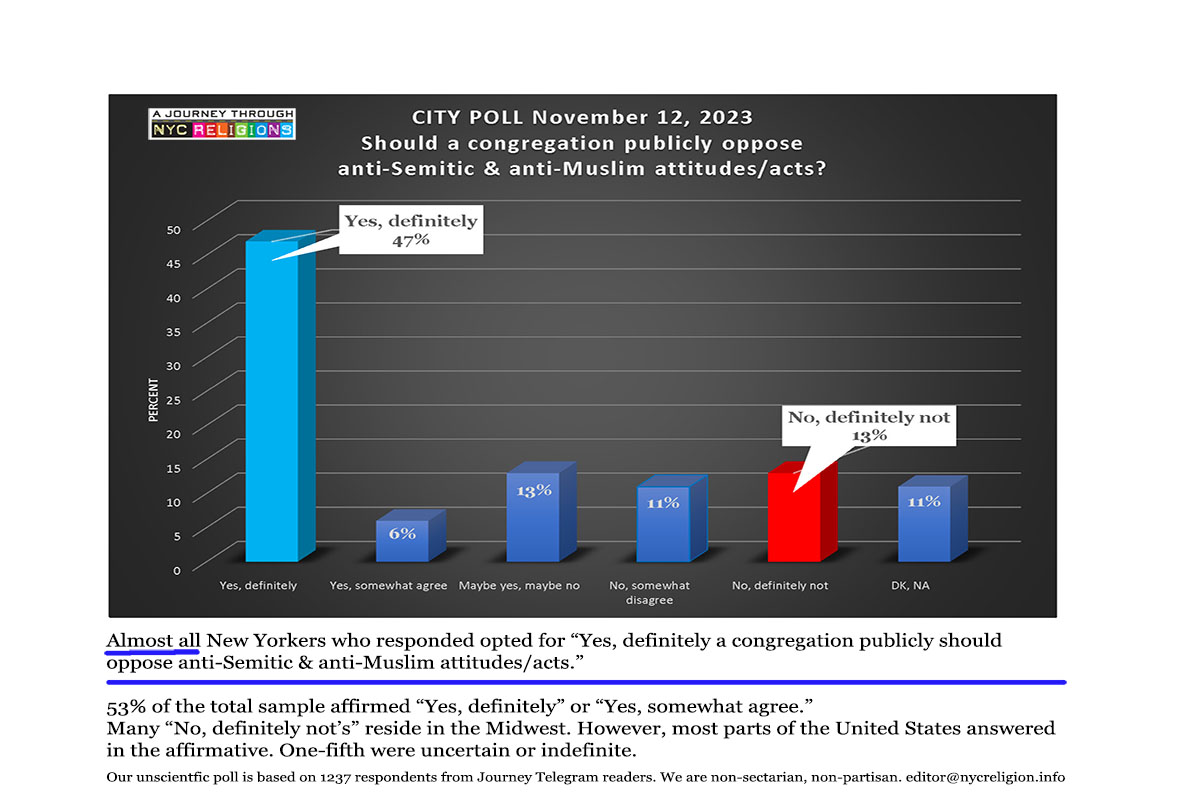
Public solidarity with Jewish communities — notes left at synagogues, interfaith prayers, shared acts of protection — strengthens the moral fabric of the city. Religious traditions can acknowledge the gifts Judaism has given the world: the creation story and creativity; the Ten Commandments and moral law; the prophetic imagination that fuels social reform; the de-divinization of the state that made democracy possible; and the affirmation that every person bears dignity. Even secular readers can recognize these contributions without sharing theological language.
And to the Christian leader whose story began this essay, I would say: I feel your suffering. Sexual abuse wounds the soul in ways outsiders cannot fully grasp. But suffering cannot be healed by turning another people into enemies. Only a vision larger than pain — a vision that refuses idols — can free us from the need to blame.
[20240524_0953]